

The 10 Main Benefits of Daycare for Building Social Skills in Kids
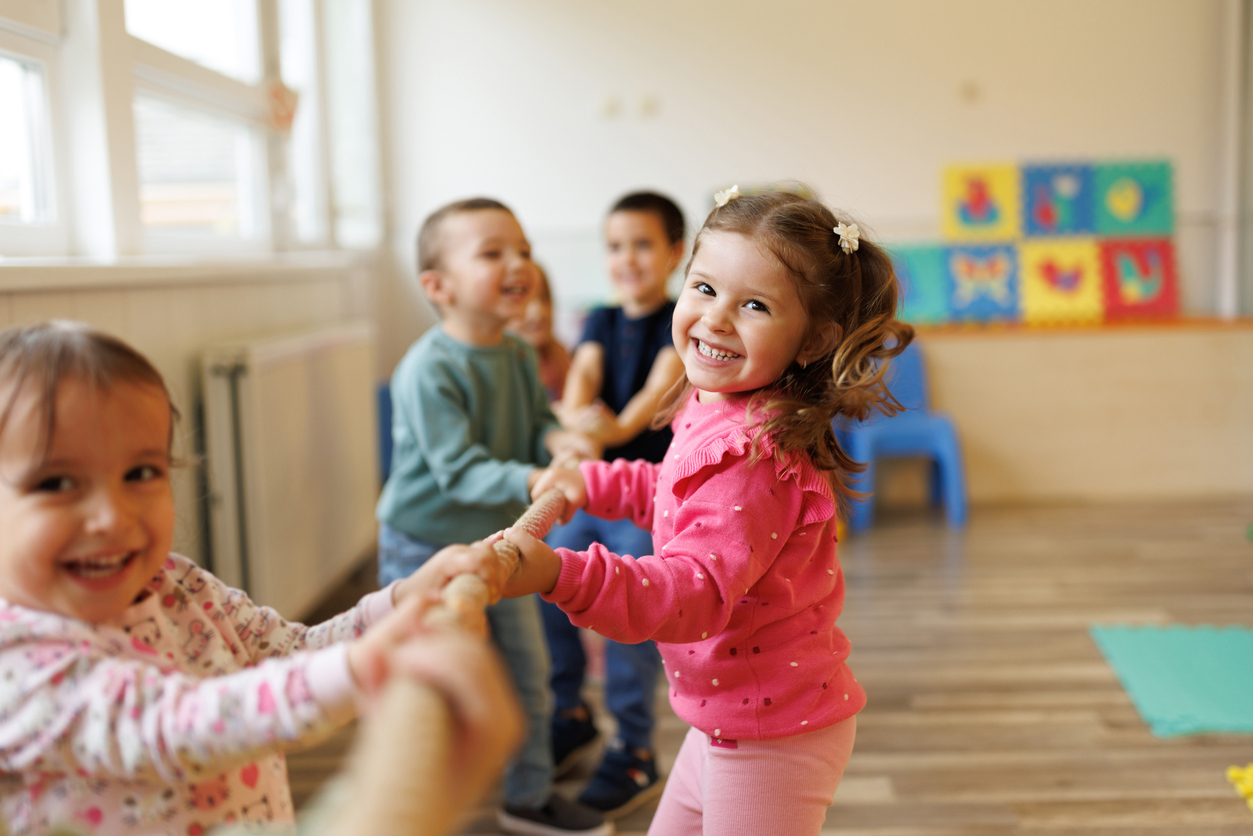
Social skills are one of the most important developmental foundations in early childhood. Skills like sharing, empathy, communication, cooperation, and emotional regulation shape how children build friendships, perform in school, and navigate relationships throughout life. While families play the central role in nurturing these abilities, daycare environments provide something uniquely powerful: consistent peer interaction within a structured social setting.
In daycare, children experience daily opportunities to practice taking turns, expressing feelings, resolving disagreements, and adapting to group expectations. According to the American Academy of Pediatrics, early social experiences strongly influence emotional development and long-term behavioral outcomes. When children are exposed to high-quality early childhood programs, they are more likely to demonstrate stronger social competence and self-regulation skills.
For many families, daycare is not only a childcare solution but also a critical environment for social learning. The key is understanding how time spent in daycare contributes to social skill development.
How Much Time Do Kids Spend in Daycare?
Understanding the average amount of time children spend in daycare helps put its social impact into perspective.
According to the National Institute of Child Health and Human Development Early Child Care Research Network, children in center-based care in the United States spend an average of 30 to 35 hours per week in daycare settings. For families with two working parents, full-time care often ranges from 8 to 9 hours per day, five days per week.
Data from the U.S. Census Bureau indicates that nearly 60 percent of children under age five regularly attend some form of non-parental childcare. Among preschool-aged children with employed mothers, center-based daycare is one of the most common arrangements.
This means that many young children spend a significant portion of their early developmental years interacting with peers and teachers outside the home. According to the American Academy of Pediatrics, the quality of these early group care experiences can influence social competence, emotional regulation, and peer relationships well into elementary school.
Because children spend such consistent time in daycare environments, these settings naturally become powerful spaces for practicing social behavior.
Now, here are the data backed benefits of daycare for kids
1. Regular Peer Interaction Strengthens Cooperation and Sharing Skills
One of the most immediate social benefits of daycare is consistent exposure to peers. Unlike playdates that happen occasionally, daycare provides daily opportunities for children to practice cooperation, turn-taking, and group participation.
According to the National Institute of Child Health and Human Development Early Child Care Research Network, children who attended high-quality center-based care demonstrated stronger peer interaction skills by preschool age compared to those who did not attend group care. These children were more likely to engage in cooperative play and less likely to exhibit withdrawn behaviors.
The Harvard Center on the Developing Child explains that repeated peer interaction builds neural pathways related to social problem-solving and empathy. When children negotiate over toys, join group activities, or work together on projects, they are developing real-time social adaptability.
Over time, these small daily interactions compound into stronger relationship-building skills.
2. Daycare Helps Children Develop Emotional Regulation
Emotional regulation is the ability to manage feelings like frustration, excitement, disappointment, and anger. This skill is critical for long-term social success.
According to the American Academy of Pediatrics, structured early childhood programs provide guided opportunities for children to practice managing strong emotions within safe boundaries. Teachers often model calming strategies, help children label emotions, and coach them through social challenges.
Research published in the journal Child Development found that children who participated in high-quality early education programs showed improved self-regulation skills, which were linked to better peer relationships and classroom adjustment in elementary school.
In daycare settings, children encounter everyday social stressors such as waiting their turn or resolving minor conflicts. With adult guidance, these experiences become practice sessions for emotional control rather than overwhelming events.
3. Early Group Care Improves Communication and Language Skills
Strong social skills depend heavily on communication. Children need to be able to express their needs, interpret social cues, listen actively, and participate in back-and-forth conversation.
Research from the National Institute for Early Education Research shows that children enrolled in high-quality early learning programs demonstrate measurable gains in vocabulary and expressive language by kindergarten entry. These gains are not just academic. They directly support social development because children who can clearly communicate are less likely to become frustrated or withdraw during peer interactions.
In daycare settings, children engage in structured discussions, imaginative play, storytelling, and collaborative problem-solving every day. These repeated verbal exchanges strengthen both language development and social confidence. Over time, stronger communication skills translate into smoother peer relationships.
4. Daycare Strengthens Conflict Resolution Abilities
Conflict is inevitable when young children share space and materials. What matters most is how those conflicts are handled.
In high-quality daycare programs, educators guide children through identifying feelings, expressing concerns, and working toward solutions rather than simply intervening or separating them. Studies published in Early Childhood Research Quarterly indicate that children who experience adult-supported peer problem-solving show lower rates of aggression and stronger prosocial behaviors over time.
Learning to say “I was using that” instead of grabbing, or negotiating turns instead of crying, represents meaningful social growth. These guided experiences help children build negotiation skills that carry into elementary school classrooms and beyond.
5. Exposure to Diverse Peers Builds Empathy and Perspective-Taking
Daycare environments typically include children from different backgrounds, temperaments, and developmental stages. This diversity broadens a child’s social understanding.
Research from the American Psychological Association highlights that early exposure to diverse peer groups improves perspective-taking and empathy development. When children regularly interact with peers who communicate differently or have different needs, they begin to recognize that others have thoughts and feelings separate from their own.
Children who develop empathy early are more likely to demonstrate cooperative behaviors and supportive peer interactions later in school. These early experiences help children adapt socially in a wide range of environments.
6. Structured Routines Support Self-Control and Group Responsibility
Daycare operates on predictable routines such as circle time, shared meals, cleanup periods, and group activities. These routines do more than create structure. They teach children how to function within a community.
The development of executive function skills such as impulse control, attention regulation, and task persistence is closely tied to social competence. Longitudinal research in Child Development has found that early self-regulation skills are strong predictors of later academic and social success.
When children practice waiting in line, listening during group activities, and following multi-step instructions, they are building self-control within a social context. These repeated daily experiences strengthen their ability to participate successfully in larger classroom environments.
7. Daycare Builds Social Confidence and Independence
Confidence in social settings develops through repeated exposure and small successes. In daycare, children regularly participate in group discussions, initiate play, make friends, and navigate shared activities. These experiences help children feel capable in social environments outside the home.
Research from the National Institute of Child Health and Human Development found that children in high-quality early childcare settings showed higher levels of social competence and independence by kindergarten entry. Children who feel comfortable engaging with peers early on are more likely to participate in classroom discussions and collaborative activities later in school.
As children practice speaking up, asking for help, and joining group play, their comfort with social interaction increases. Over time, this repeated exposure reduces social anxiety and builds lasting confidence.
8. Early Daycare Experience Supports Stronger Peer Relationships
Developing and maintaining friendships is a core social milestone in early childhood. Daycare provides consistent opportunities to build these early peer bonds.
Studies published in Child Development have shown that children who attend high-quality early learning programs demonstrate stronger peer acceptance and fewer social difficulties in elementary school. Early peer experiences help children learn how to read social cues, interpret body language, and adjust behavior based on group dynamics.
Children who form friendships in daycare settings practice cooperation, loyalty, and conflict resolution within ongoing relationships rather than one-time interactions. These early relational skills often translate into smoother social integration when transitioning into kindergarten and beyond.
9. Positive Teacher-Child Relationships Reinforce Prosocial Behavior
Children do not only learn from peers. They also model behavior based on how trusted adults communicate and respond to challenges.
Research consistently shows that warm, responsive teacher-child relationships in early childhood settings are associated with stronger social-emotional outcomes. Children who feel emotionally secure with caregivers are more likely to demonstrate helping behaviors, empathy, and cooperation.
Supportive educators model respectful communication, patience, and emotional expression. When teachers guide children through problem-solving and validate their feelings, children internalize those social patterns.
Strong adult relationships in daycare create a secure base from which children can confidently explore peer relationships. This emotional security is a critical foundation for long-term social development.
10. Early Daycare Experiences Can Support Long-Term Social Success
The benefits of early social exposure do not end in preschool. Longitudinal research suggests that high-quality early childcare experiences can influence social outcomes well into adolescence.
The NICHD Study of Early Child Care and Youth Development followed children from infancy through high school and found that those who attended high-quality early care demonstrated stronger social competence and peer relationship skills in later years. While quality and family environment remain critical factors, structured early peer interaction was associated with improved cooperation and reduced social withdrawal.
Other long-term research on early childhood education programs has shown that early gains in self-regulation and prosocial behavior are linked to higher graduation rates and improved adult outcomes. Social skills built in early childhood form part of the foundation for teamwork, leadership, and healthy relationships later in life.
Daycare alone does not determine a child’s future. However, when it provides a nurturing, well-structured environment, it can meaningfully support the development of skills that last far beyond the early years.D
Daycare has many benefits for your child's social development
Daycare plays a significant role in shaping early social development because it offers something uniquely powerful: consistent, guided peer interaction. Children spend an average of 30 to 35 hours per week in center-based care, which means these environments become major spaces for practicing communication, empathy, cooperation, and emotional regulation.
From learning how to share and resolve conflicts to building confidence and classroom readiness, daycare helps children rehearse the social skills they will rely on throughout life. Research consistently shows that high-quality early childcare programs are associated with stronger social competence, improved self-regulation, and smoother transitions into school.
For parents, the key is not simply enrollment, but selecting a program that prioritizes responsive caregiving, structured routines, and positive peer engagement. When daycare environments are supportive and intentional, they can become powerful foundations for lifelong social success